Strategic Toolkits & Frameworks
Strategic toolkits and frameworks developed to support responsible AI integration in complex organizations.
These resources translate research-informed advisory practice into structured instruments that leadership teams can use to assess readiness, design governance structures, and align institutional strategy with emerging AI capabilities.
Each toolkit is designed to provide clarity before deployment. They combine governance architecture, trust-centered design, and executive decision frameworks that help organizations move beyond experimentation toward deliberate and defensible integration.
Access to these materials is provided through direct inquiry to ensure alignment with organizational context and strategic objectives.

Strategic Architecture for Responsible AI Adoption
Aotai Consulting strategic toolkits are not standalone resources. They form a structured advisory system designed to help organizations move from experimentation to deliberate AI governance and deployment.
Each framework addresses a different layer of institutional readiness, from organizational capability and governance architecture to leadership communication and oversight design.
Together, these instruments provide executive teams with a coherent structure for evaluating risk, aligning leadership decision-making, and establishing the governance foundations required for responsible AI adoption.
The Aotai Strategic AI Framework
1.
Readiness Assessment
Evaluate institutional capability, risk exposure, and AI maturity.
2.
Governance Architecture
Design oversight structures, accountability models, and escalation pathways.
3.
Strategic Communication
Align leadership messaging, transparency practices, and stakeholder confidence.
4.
Operational Integration
Translate governance and strategy into sustainable implementation practices.
Strategic AI Communication Architecture Framework
Strategic Communication Framework
A structured leadership framework for designing the communication architecture that supports trustworthy and accountable AI integration. Artificial intelligence initiatives often succeed or fail based on how clearly leadership communicates purpose, risk posture, and accountability across the organization. This framework helps leadership teams translate AI strategy into a structured communication model that aligns executives, employees, and external stakeholders around responsible adoption.
Organizations use this framework to design internal messaging structures, transparency practices, and escalation pathways that build confidence in AI systems while addressing legitimate concerns about risk, oversight, and accountability. The framework is designed for executive leaders, governance teams, and transformation programs responsible for guiding AI adoption in complex or regulated environments.

What the Framework Enables
• Design structured communication strategies for AI initiatives
• Align executive messaging with governance and risk posture
• Identify communication gaps that undermine trust and adoption
• Develop transparency practices for employees and stakeholders
• Establish escalation pathways for AI-related concerns
What’s Included
• Strategic AI Communication Architecture Guidebook
• Stakeholder communication mapping framework
• Leadership messaging and transparency design templates
• Communication escalation and accountability structures
Access
This framework is provided through direct inquiry to ensure alignment with organizational context and implementation goals.
Executive-grade frameworks for designing trustworthy AI systems.
These strategic toolkits translate advisory experience and research into structured frameworks that leadership teams can use to assess readiness, design governance structures, and align AI initiatives with institutional objectives. Each resource is developed for complex organizations where trust, accountability, and regulatory scrutiny shape how artificial intelligence is adopted and managed.
AI Risk & Readiness Assessment Toolkit
Strategic Assessment Framework
A structured leadership framework for evaluating whether your organization is prepared to adopt artificial intelligence safely, responsibly, and strategically. This toolkit provides a research-aligned assessment across the institutional foundations that determine whether AI initiatives succeed or stall, including governance, workforce capability, data readiness, communication practices, and ethical oversight.
Organizations use this framework to identify hidden risks, clarify strategic priorities, and establish the governance structures necessary for responsible AI adoption before large-scale deployment. This toolkit is intended for executive leaders, governance teams, and transformation programs responsible for assessing readiness and guiding responsible AI adoption in complex environments.
What the Toolkit Enables
• Evaluate AI readiness across five critical organizational dimensions
• Identify structural risks that may undermine AI initiatives
• Generate leadership-ready dashboards and readiness summaries
• Prioritize governance, workforce, and data investments
• Build a phased roadmap for responsible AI integration
What’s Included
• Comprehensive AI Readiness & Risk Audit Guidebook
• Interactive Excel assessment and scoring dashboard
• Category-level maturity scoring across five readiness domains
• Automated readiness visualization and executive summary outputs
The toolkit includes a detailed guidebook and an interactive Excel scoring system designed to translate readiness assessments into leadership-ready insights and actionable planning.
Access
This toolkit is provided through direct inquiry to ensure alignment with organizational context and implementation goals.

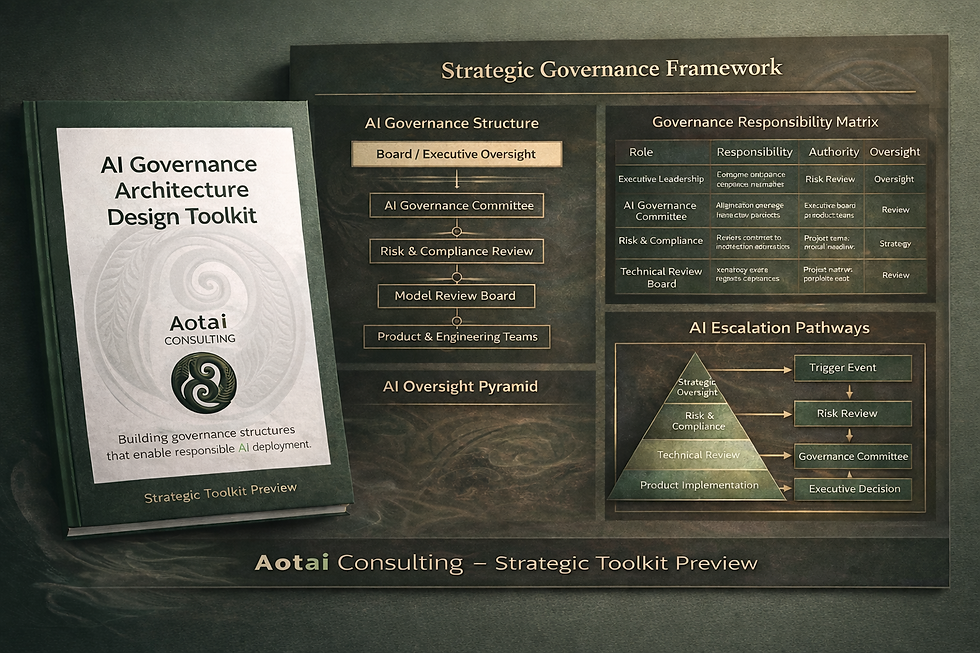
AI Governance Architecture Design Toolkit
Strategic Governance Framework
(Coming Soon)
A structured toolkit for designing governance architectures that support responsible, accountable, and sustainable AI integration. Effective AI adoption requires governance structures that define oversight, accountability, risk management, and decision authority across the organization. This toolkit provides a practical framework for translating ethical principles and regulatory expectations into operational governance structures that function within real enterprise environments.
Organizations use this toolkit to design governance models that clarify roles, align oversight mechanisms with risk posture, and establish the structures required for responsible AI deployment at scale. The toolkit is intended for executive leadership teams, governance committees, and risk leaders responsible for overseeing AI adoption in complex or regulated environments.
What the Toolkit Enables
• Design enterprise AI governance architectures
• Define oversight structures and accountability models
• Align governance with institutional risk posture
• Establish escalation and review mechanisms for AI systems
• Map governance responsibilities across leadership teams
Status
This toolkit is currently in development and will be released soon.
Organizations interested in early access or pilot collaboration are encouraged to inquire.
Strategic Toolkit Access
These strategic toolkits and frameworks are designed for executive leadership teams navigating the operational, governance, and risk implications of artificial intelligence.
Each toolkit translates advisory experience and research into structured instruments that organizations can use to assess readiness, design governance architectures, and align institutional strategy with emerging AI capabilities.
Access to these materials is provided through direct inquiry to ensure alignment with organizational context, implementation goals, and institutional complexity.
*Requests are reviewed to ensure appropriate organizational fit and implementation context.